
Flooding employees with information is easy. Making sure that everyone sees what is relevant to him or her is another story. In this edition from under the hood we look at Iris Intranet: a platform that takes exactly that as a starting point.
We already dived into Iris Intranet in 2017. Sincethen, themes such as information overload, audience-oriented communication and data sovereignty have only become more relevant. Reason enough to look under the hood again.
Relevance before reach
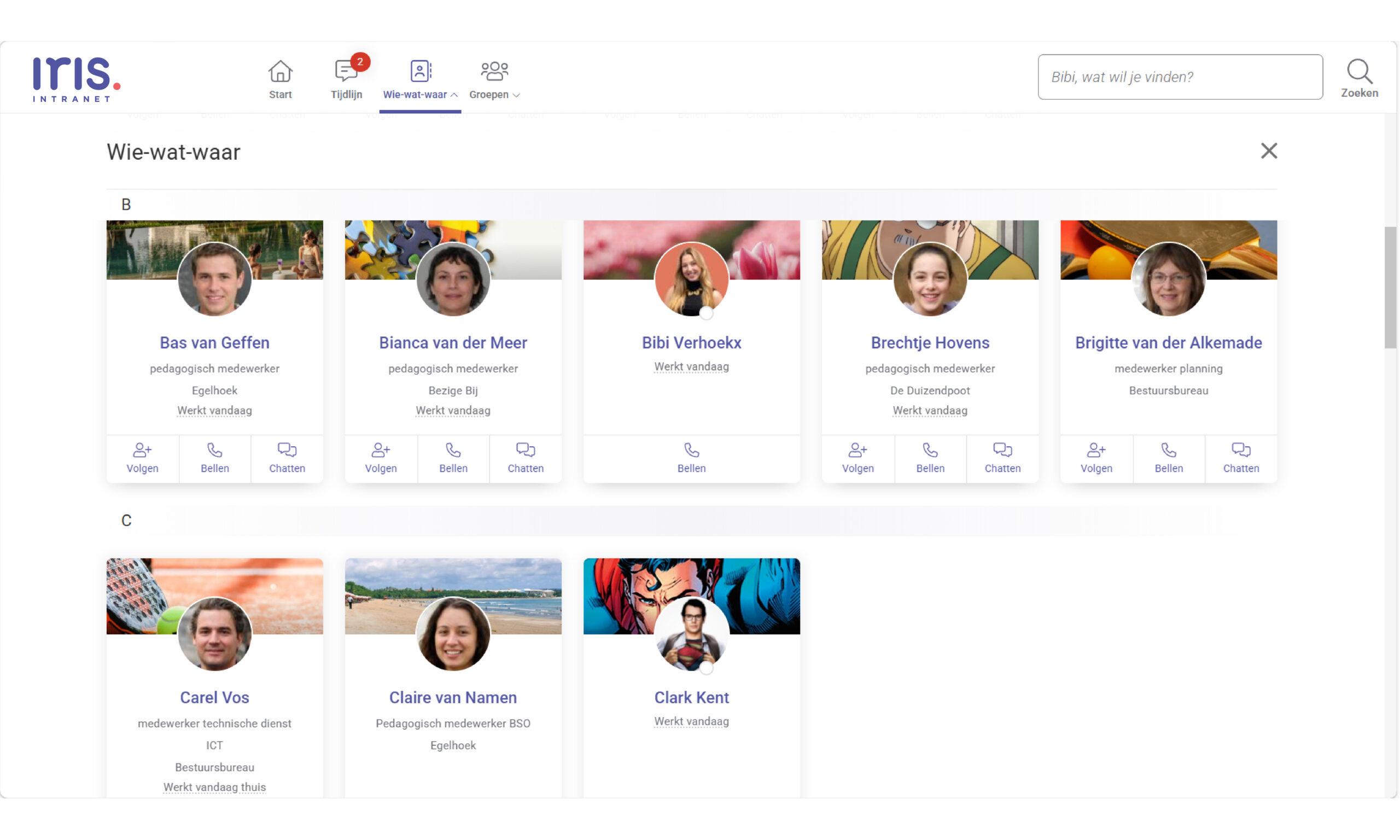
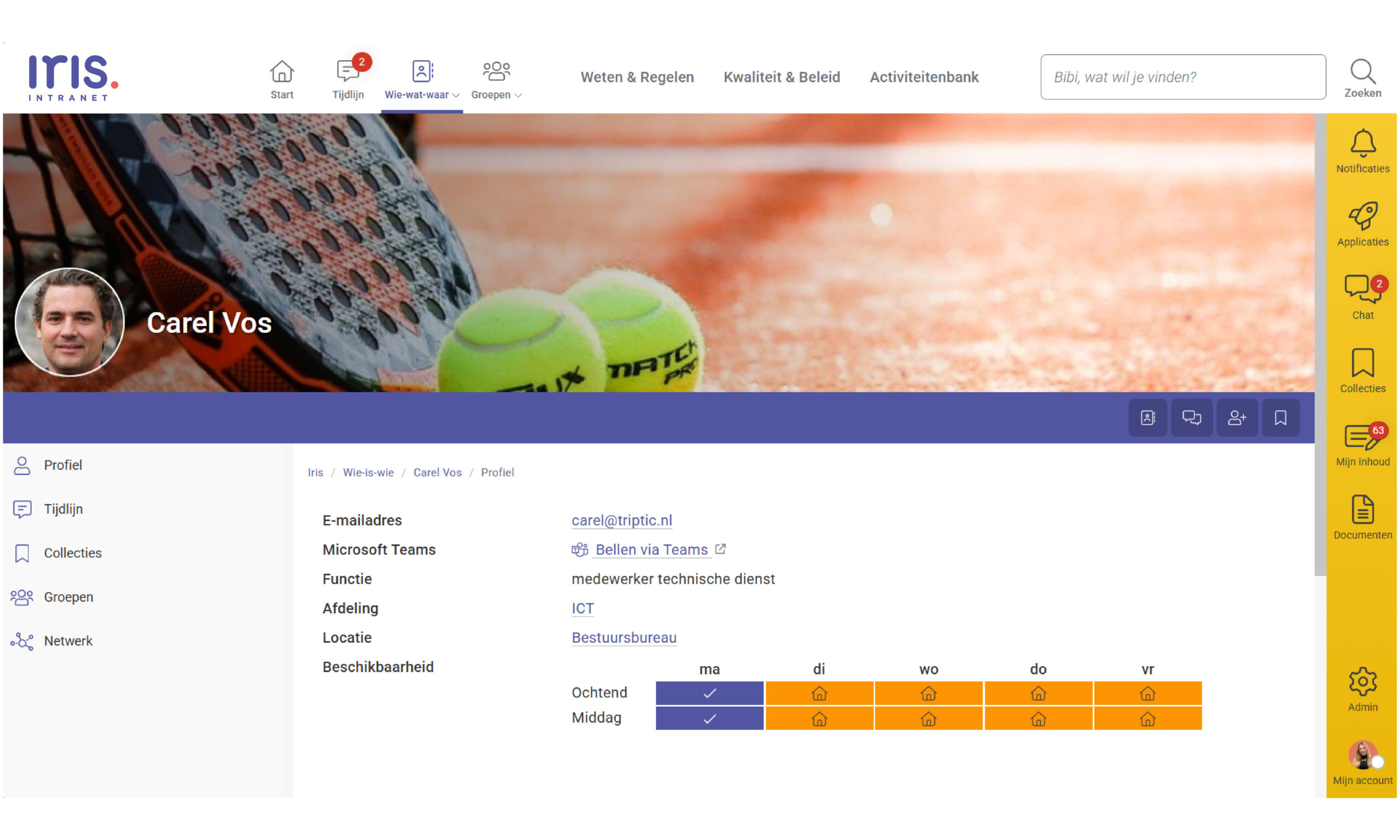
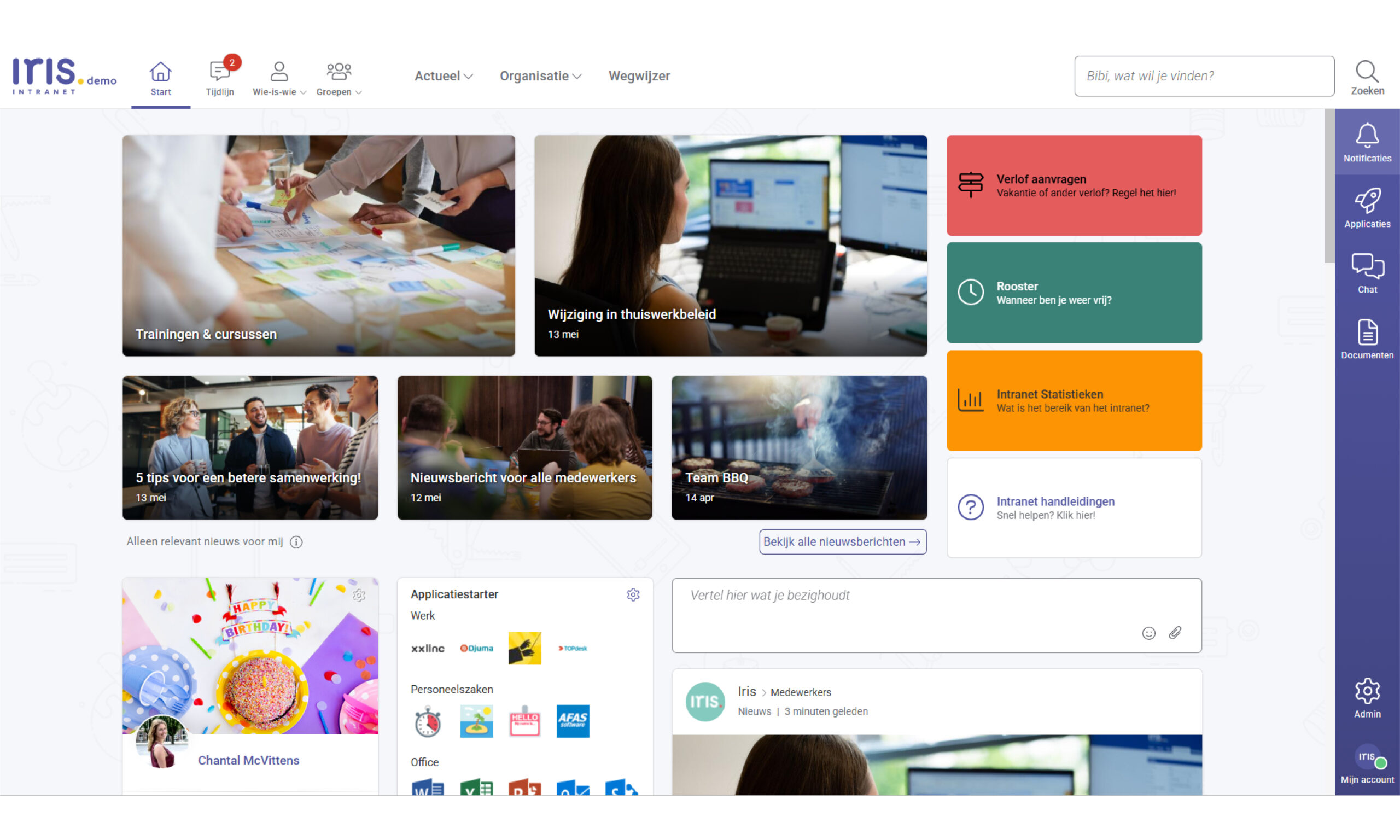
The basis of an intranet – publishing, news, timeline, scrapbook and groups – is also in Iris Intranet. Iris goes beyond these standard functionalities. Everything is developed with one goal, making the daily work of end users as simple and efficient as possible. Take the traditional smolenboek: Iris converted it into a Who-What-Where, in which people, departments, locations and contact details come together.
The real distinction is deeper. Iris revolves around one key question: How do you ensure that employees have to filter less and find what is relevant to them faster?
The right information for the right colleague
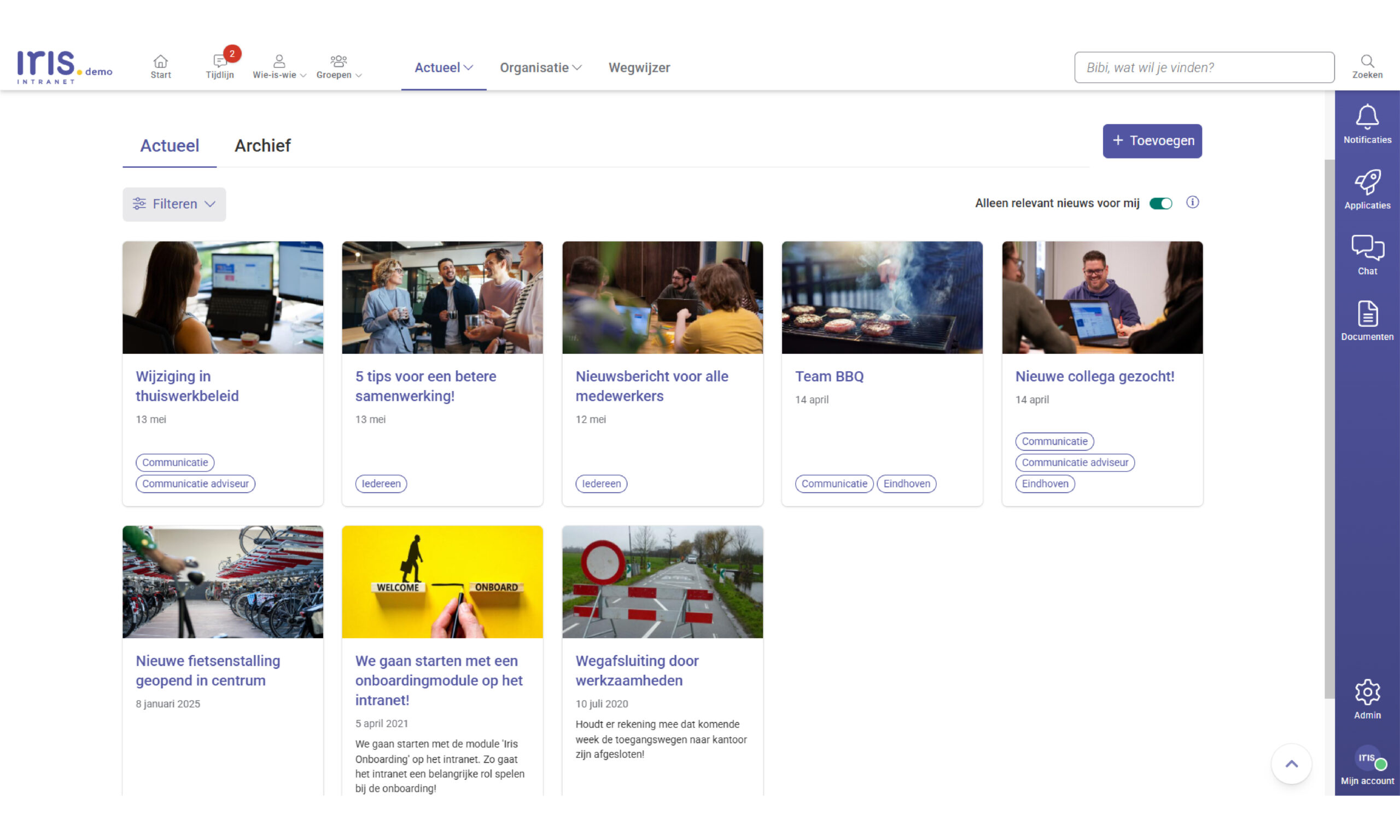
On many intranets, things go wrong because of the everything-to-everyone principle. Iris does it differently. The platform steers on segmentation: information only reaches thecolleagues for whom it is actually intended, based on taxonomies and groups.
This does not only apply to news reports. Application links, top tasks and the home page also adapt to, for example, location, function or department. Does a particular location use a form on a daily basis? Then that appears as a top task. Do other locations not work with it? Then they won’t see it. It sounds simple, but in practice this makes the difference between an intranet that helps and an intranet that distracts.
Knowledge that beats
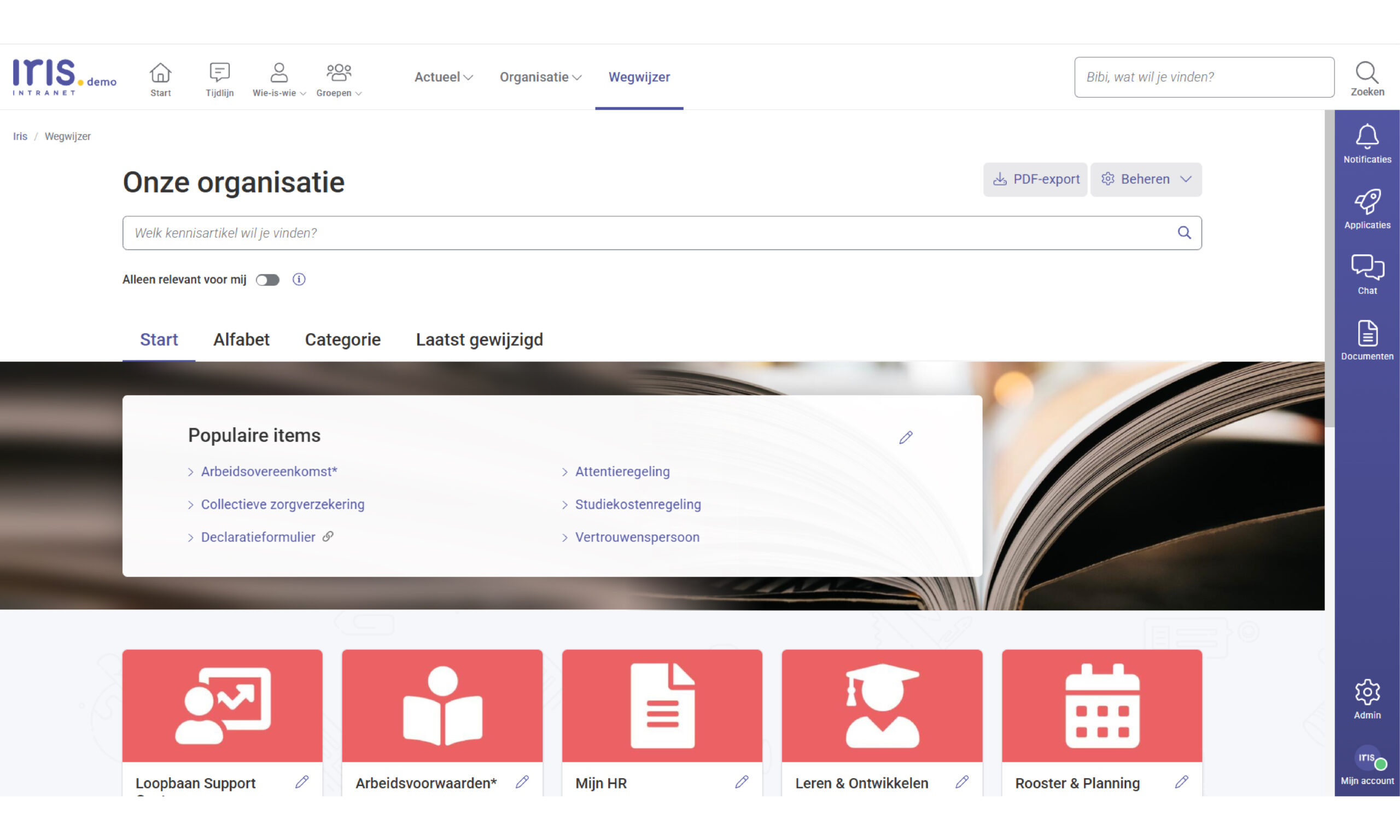
In addition to the social nature, Iris pays great attention to knowledge that must be reliable: procedures, schemes, manuals. Through the service Square and a content ownership system, the platform determines who is responsible for which content and when it is due for an update.
Basal? Maybe. But it is precisely this type of management that determines whether employees trust the intranet as a source. And trust is a prerequisite for good use.
Find it without guessing search terms
Iris presents findability as its core function. The search engine not only searches the intranet itself, but also linked systems such as Microsoft, Google, TOPdesk, Zenya and Vilans. Are you looking to apply for leave while the procedure is called applying for vacation? Then the Vindmachine will still send you the right way op.
In practice makes the intranet the starting point of the working day: quickly grab the right document, the right colleague or the right procedure, without having to remember where it was.
Data is and remains in the Netherlands
Where many platforms for hosting, development or underlying software fall back on parties outside the EU, Iris opts for a completely Dutch chain. Iris develops and hosts the platform in the Netherlands, and data does not leave the country.
For organizations that focus on Dutch or European compliance requirements (think of governments and vital sectors, but also increasingly care and education), this is a relevant fact. Especially now that data sovereignty is getting higher on the agenda.
| Meer Onder de Motorkap? Lees ook over andere platforms en leveranciers |
Ik wil er alles over lezen! |
AI as a choice, not as a standard
Iris does not exclude AI, but does not impose it either. AI applications connect to sovereign solutions, so organizations can keep track of what’s happening with their data. At the moment, Iris is working on AI-supported content creation and an AI agent in the form of a chatbot based on open standards. With the aim: to use AI without each application having its own standalone chatbot.
Accessibility
Making a social intranet with many forms of interaction really accessible is not easy. Iris Intranet is WCAG 2.1 AA certified, and not with exceptions: it concerns a complete score. For many organizations, this is a tough requirement. For other organizations that take inclusion seriously, this is a concrete plus.
Cost
Iris works with a one-time deployment fee and an annual license based on a price per user per month. The final costs depend on layout, integrations, desired modules and management.
Short
Iris Intranet distinguishes itself by focusing on relevance: not more information, but the right information for the right colleague. Combined with a completely Dutch chain and serious attention to accessibility, it focuses on organizations that want to keep a grip on both their content and their data. Whether that makes a difference in practice depends, as with any intranet, on how well you set it up and whether the organization embraces it.
Want to know more?
More information about Iris Intranet and the functionalities of their solutions can be found on the Iris Intranet website (in Dutch).
Can you use independent advice when choosing a platform provider? Contact Peter Haan via peter@evolve.eu or +31 6 13 98 14 27. Or leave your details via the contact form: